01The cargo route
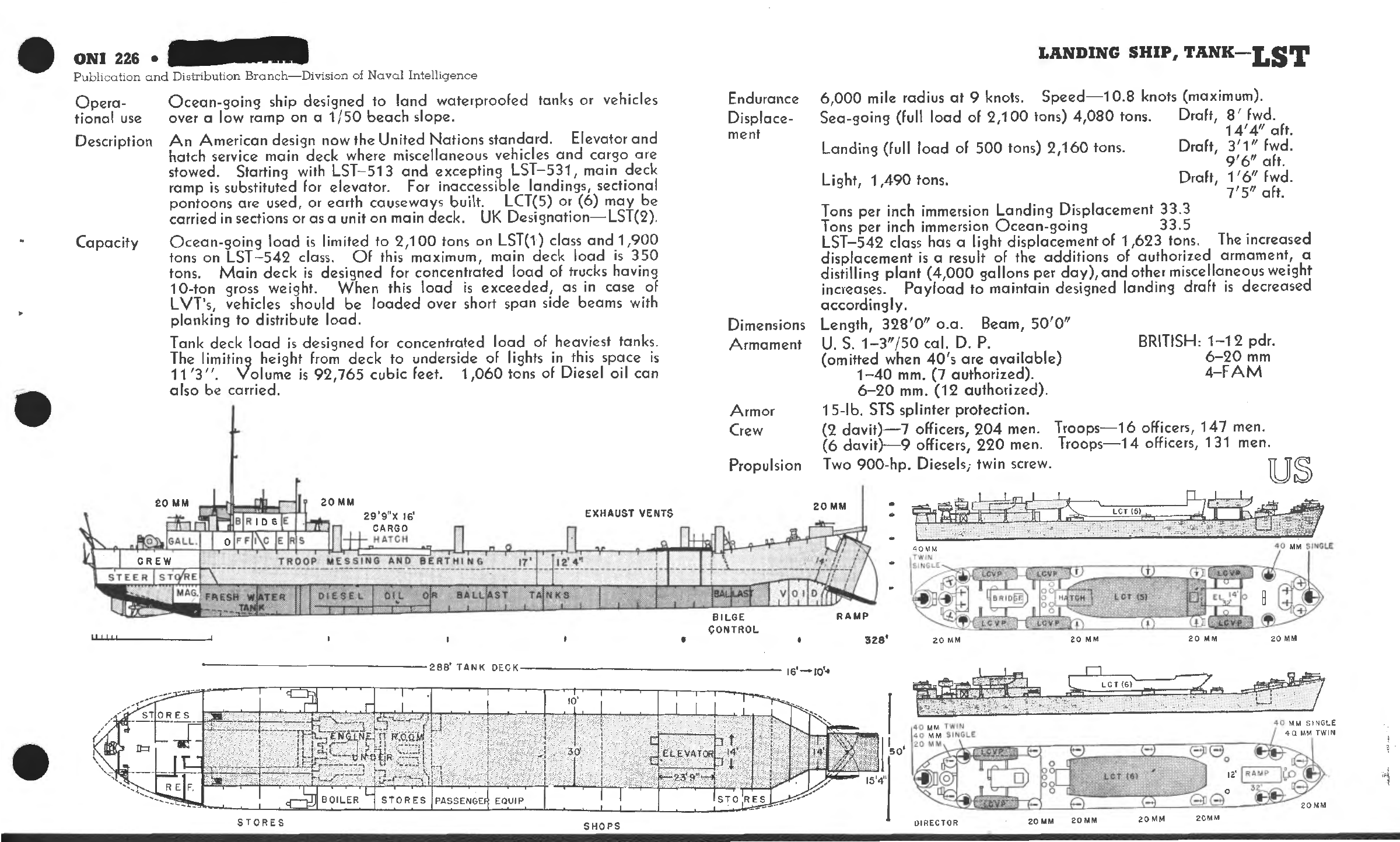
The long tank deck runs through the hull toward the bow ramp. Above it, the open main deck provides more room for vehicles and cargo. The recognition sheet below also shows how a smaller landing craft could ride on the main deck.
SHIP PROFILE · LANDING SHIP, TANK
A working ship with an extraordinary job: carry men, vehicles, and supplies across the Pacific, then help put them ashore.
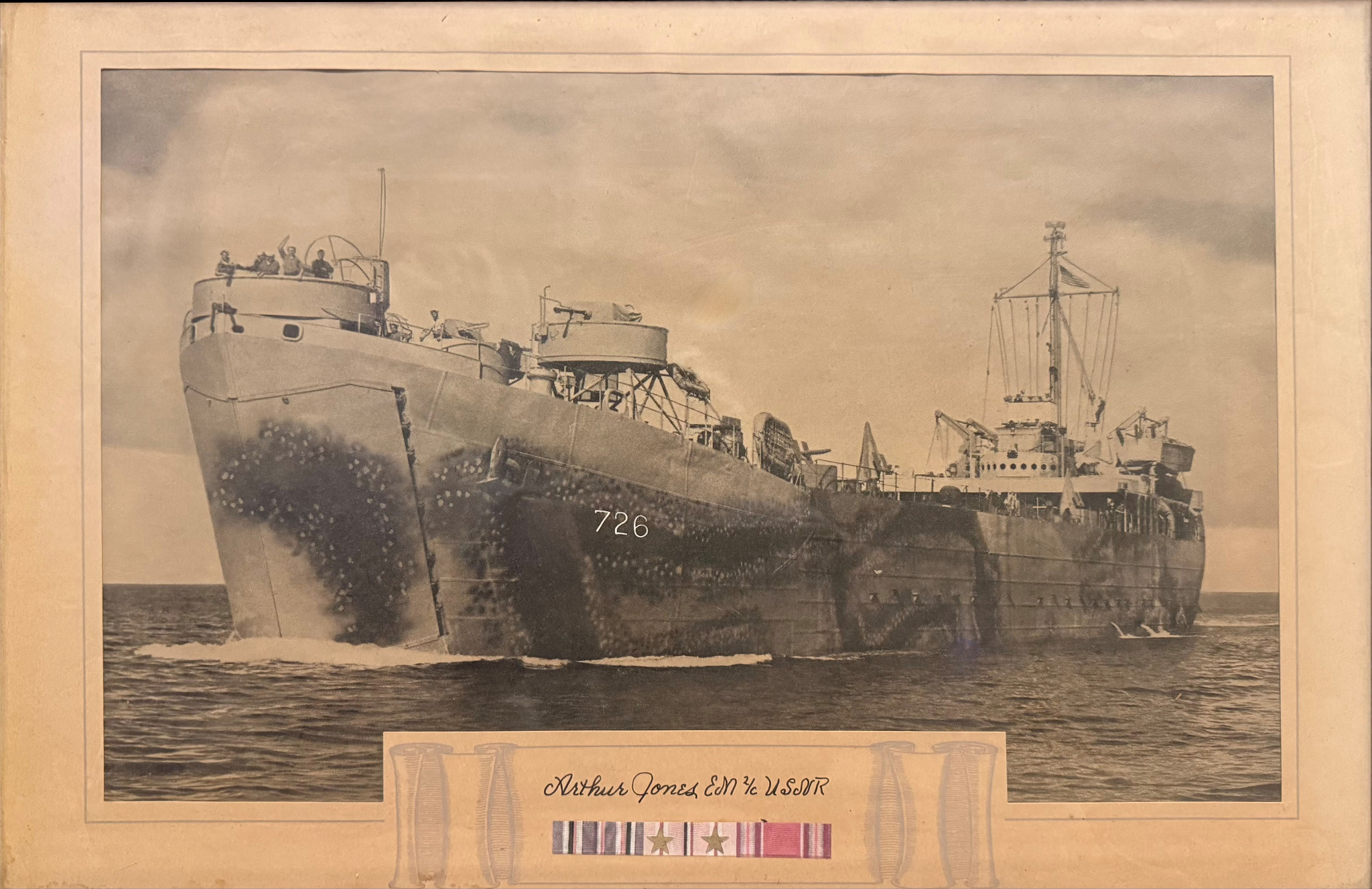
Arthur T. Jones family collection, shared by his son Bob Jones. The full keepsake is preserved, including the border, inscription, and ribbons.
The vessel in the underlying photograph has not been independently identified. The “726” marking is part of the family keepsake. Explore Arthur’s family profile.
01 / UNDERSTANDING THE SHIP
LST means “Landing Ship, Tank.” These vessels could cross an ocean with vehicles and cargo aboard, then bring that load close to shore. Their distinctive bow doors and low ramp gave wheeled and tracked vehicles a route out of the tank deck.
The Navy’s cutaway opens up the spaces hidden behind the hull: cargo decks, sleeping quarters, the galley, machinery, and tanks below. Follow the layers from the bridge at the top to the hold at the bottom.
This is a representative WWII-type LST illustration, published in 1959. It is not an as-built plan of LST-726.
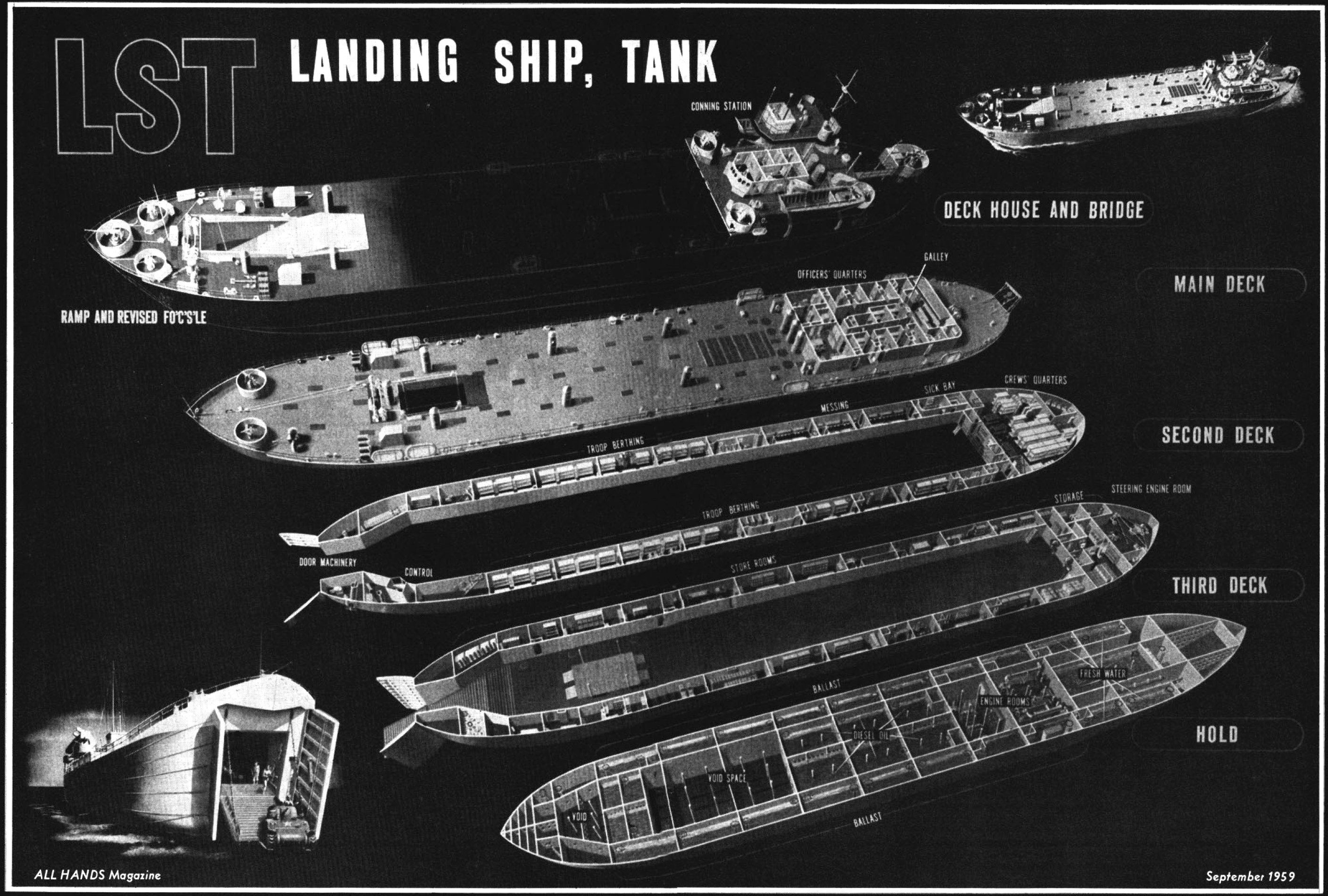
U.S. Navy, All Hands, September 1959, pp. 32–33. The drawing includes elevator and revised-ramp arrangements. Public-domain government illustration; digital copy via Wikimedia Commons.
Open drawing to zoom ↗The long tank deck runs through the hull toward the bow ramp. Above it, the open main deck provides more room for vehicles and cargo. The recognition sheet below also shows how a smaller landing craft could ride on the main deck.
Troop berthing lies along the sides of the cargo space in this cutaway. Crew quarters, messing spaces, a sick bay, officers’ quarters, and the galley fit around the working decks. The bridge and conning station rise aft, overlooking the ship.
Two diesel engines drove twin propellers. The lower hull also held fuel, fresh water, and ballast spaces. The wartime manual lists different drafts for ocean passage and landing, a reminder that carrying cargo at sea and approaching a beach made very different demands.
Read the original sources: All Hands, September 1959 ↗ · ONI 226, April 1944, PDF page 113 ↗
A period source with a side section, tank-deck plan, dimensions, and silhouettes of the elevator and ramp variants. This describes the LST type rather than the individual fittings of LST-726.
02 / THE SHIP AT WORK
The design explains what an LST could do. LST-726’s own story shows how the crew put it to work, from loading Marines at Maui to maintaining the machinery and supplies that kept the ship going.
The LST-726 episodes below are drawn from Mike Grobbel’s historical account, preserved in this archive. A separate oral history offers a crew member’s perspective from another Pacific LST.
LST-726 · MEN AND MATÉRIEL
At Maui in January 1945, LST-726 loaded Marines along with vehicles, howitzers, ammunition, equipment, and supplies. More men came aboard at Saipan. At Iwo Jima, troops and cargo began moving toward the beaches while the ship worked offshore; unloading continued over several days.
Read about the loading and voyage →LST-726 · A SHIP CARRYING A CRAFT
LCT-689, a roughly 120-foot landing craft, traveled lashed to LST-726’s main deck. On 1 April 1945, during the Okinawa operation, the crew launched it into the sea. The photograph below preserves that unusual use of an LST’s broad working deck.
Read the launch account →LST-726 · KEEPING THE SHIP GOING
On 6 April 1945, failure of an evaporating unit brought a water emergency aboard LST-726. Later that month, the ship reached Ulithi for replenishment and repairs to its hull and propellers. These practical needs were part of the ship’s service alongside the better-known landing operations.
Read the water-emergency account →A VOICE FROM ANOTHER LST
James Buckley, a deck and stores officer aboard LST-1013, recalled long supply runs and the work of finding food and spare parts at each port. Fresh food could be scarce for long stretches. His oral history gives a personal view of Pacific LST life; these are his memories of LST-1013, not testimony about LST-726.
Hear his account at the National WWII Museum ↗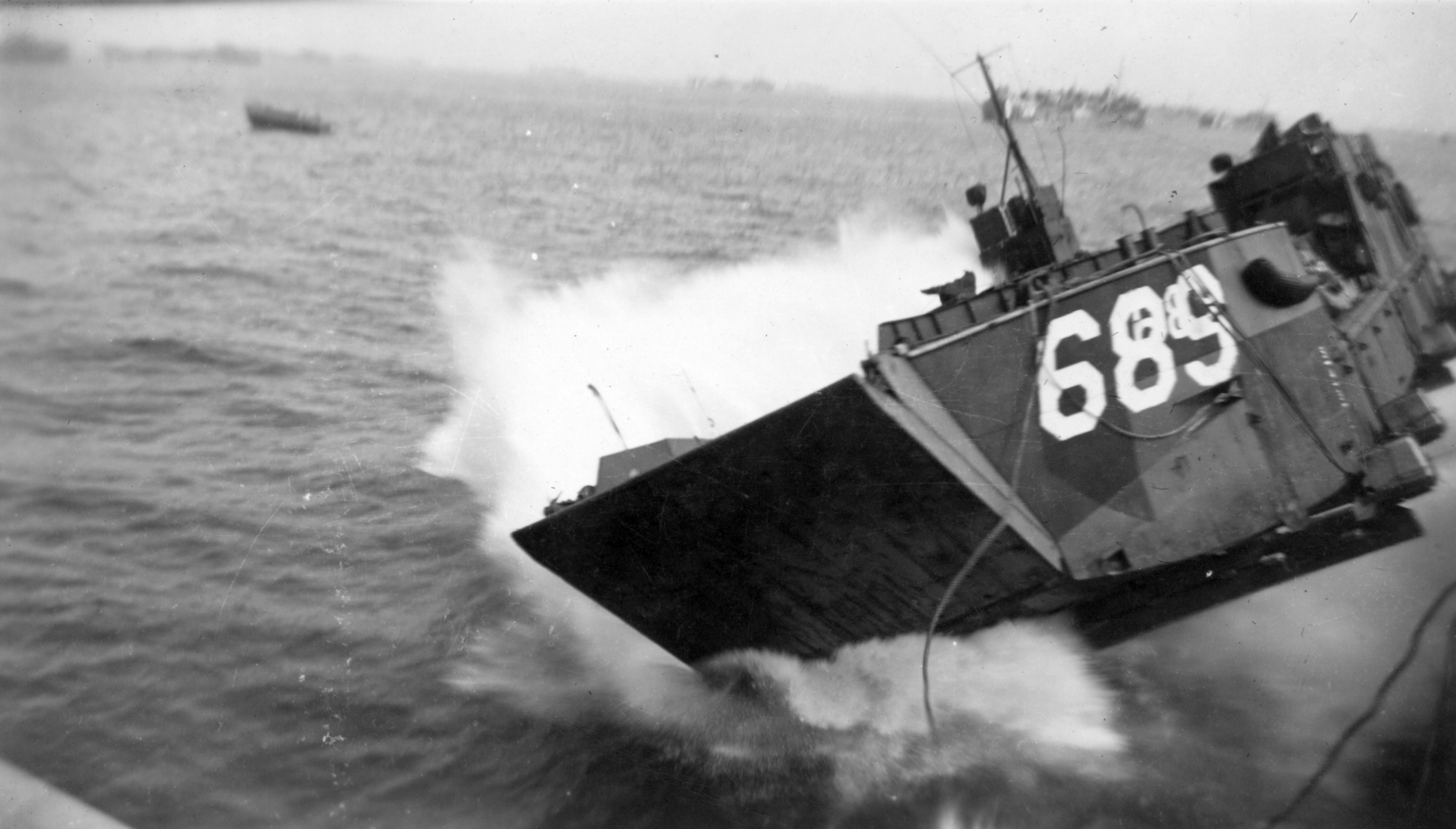
LCT-689 is launched from the deck of the LST-726, Okinawa, 1117 hours, April 1, 1945
Original caption preserved. Frederick Lee Oselett’s World War II photo album. Preserved source page ↗
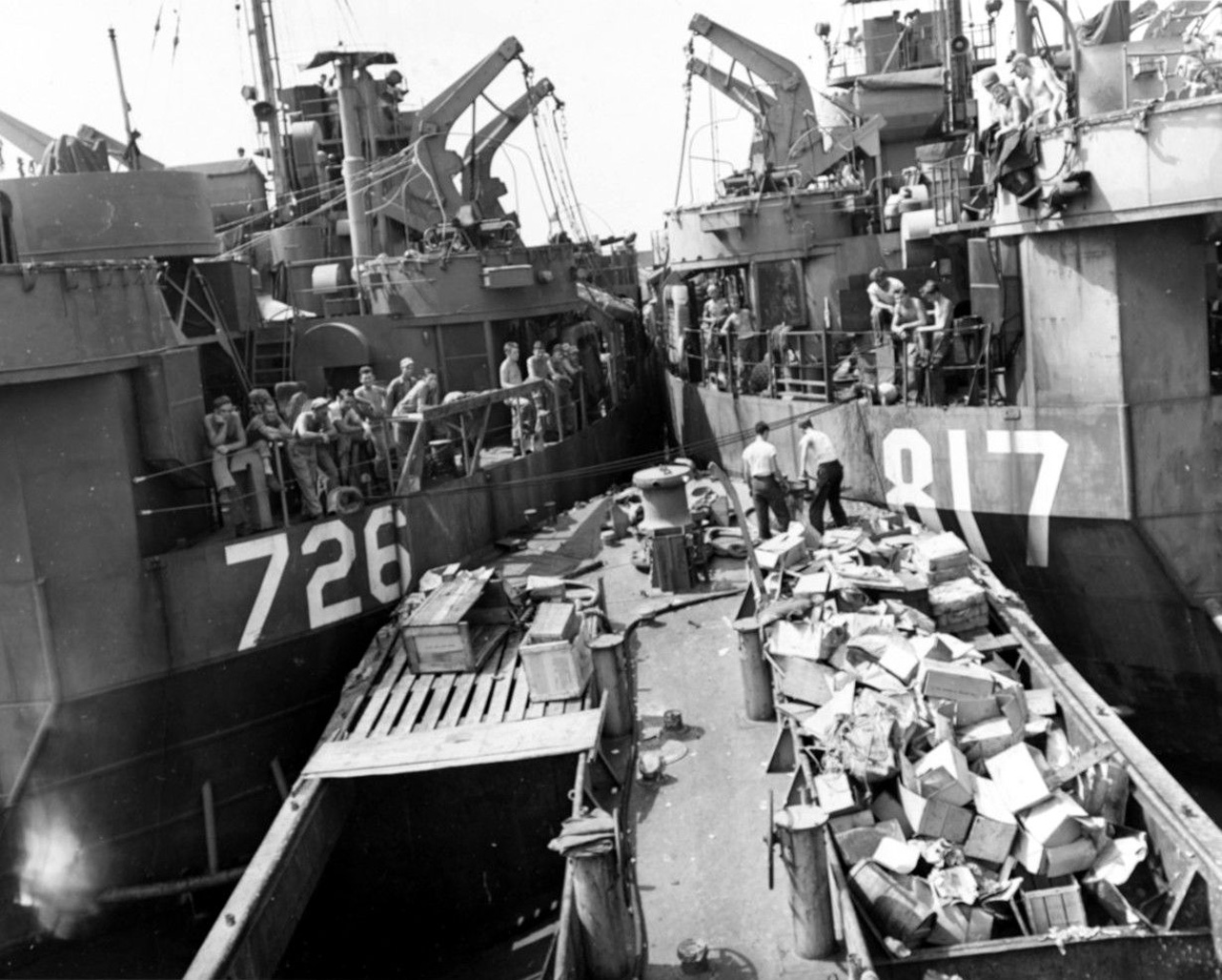
03 / IN THE NAVY’S RECORD
Here is LST-726 in an identified official Navy photograph. Its hull number appears at left, beside LST-817. Between the ships, sailors are carrying out a much more ordinary task than an assault landing: transferring rubbish to a harbor lighter.
The scene brings the scale of the ship down to a human level, with men, railings, davits, and working decks all in view.
Look closer at the photograph ↗LST-726 began commissioned service, then joined the Pacific war.
FEBRUARY–APRIL 1945
The ship served in both operations and earned two battle stars for World War II service.
After occupation duty in the Far East, LST-726 was decommissioned. It was sold for scrapping on 5 December 1947.
Service milestones: Naval History and Heritage Command, Dictionary of American Naval Fighting Ships ↗
04 / FILMS & FIRSTHAND VOICES
Walk through a surviving LST, travel aboard her on the river, and hear the men who served. These films bring the spaces, work, and everyday experience of landing ships to life.
These selections feature other LSTs and the wider LST story, rather than footage or testimony about LST-726. Each link opens the original video on YouTube.
A WALK THROUGH THE SHIP
Step inside USS LST-325 for a tour of the living spaces, galley, wheelhouse, and engine room. A close-up companion to the cutaway drawings above.
UNDER WAY ON THE RIVER
Join LST-325 on the Ohio River as she returns to Evansville. Drone views and a passage through a lock and dam show the ship moving through the water today.
A SAILOR REMEMBERS
Leo Bednarczyk recalls his Navy service aboard LST-124 in a two-part account, illustrated with wartime footage and photographs.
FROM SHIPYARD TO WATER
A wartime Coast Guard film follows the construction and launch of LST-603, later named USS Coconino County in 1955. LST-521 and LST-470 also appear.
MEMORIES FROM LST-1063
Robert “Bob” Coulson shares stories from his service on LST-1063. Start with the public interview, or jump to his account of beaching an LST at the eight-minute mark.
The full-length interview is offered separately to History X members.
FOLLOW THE EVIDENCE
This page brings together a family keepsake, identified photographs of LST-726, and explanatory drawings of the wartime LST type. Each image keeps its own identity, date, and credit. The drawings help explain the ship’s design without claiming to document every fitting aboard LST-726.
The Navy drawings and official Navy photograph are public-domain U.S. government works. Family material and the Oselett album retain their individual credits. For the Navy’s guidance, see its photographic reproduction policy ↗.
Keep following the story.